 blog
Best Fidget Toys for ADHD Kids: A Parent's Guide
Table of Contents
- Why Fidget Toys Help Kids with ADHD Focus and Stay Calm
- Types of Sensory Toys for Kids with ADHD
- Choosing Quiet Fidget Toys for Classroom Use
- How to Use Fidget Toys in the Classroom: A Teacher's Guide
- Fidget Toys for ADHD at School: What Works Best
- Safety, Durability, and Age-Appropriate Choices
- How to Match a Fidget Toy to Your Child's Sensory Needs
- Frequently Asked Questions
Last Updated: October 16, 2026
Why Fidget Toys Help Kids with ADHD Focus and Stay Calm
The best fidget toys for ADHD kids are small, quiet, tactile tools that give busy hands something to do so the brain can settle into a task.
How Fidgeting Supports Concentration
Fidgeting is not misbehavior, it is a child's nervous system seeking the sensory input it needs to stay regulated. When the hands are busy with a quiet, repetitive motion, the rest of the body can hold still and attention has somewhere to land. Occupational therapists call this a steady "background channel" so the main task can stay in front.
What the Evidence Actually Says
Research on fidget toys is mixed, and no toy replaces treatment, classroom accommodations, or a plan from your child's care team. Treat a fidget as one small tool in a larger set of strategies, not a cure.
The CDC overview of ADHD in children is a useful starting point for understanding what ADHD is and how it is managed.
Types of Sensory Toys for Kids with ADHD
Sensory toys for kids with ADHD fall into a few broad groups, and most children do best with one or two favorites rather than a whole bin. Match the category to what your child reaches for when restless.
Tactile and Squishy Fidgets
These are the toys kids squeeze, stretch, or roll between their fingers: squishy toys, slow-rise squish, stretchy toys, and pull toys. They deliver the tactile stimulation many sensory-seeking children crave. A slow-rise squish suits a child who needs calming input rather than an energy outlet.
Wearable and Chewable Options
Wearable fidgets, spiky rings, fidget chains, and chewable fidgets stay on the body, so there is nothing to lose under a desk. Chewable options serve kids who mouth objects but carry real safety rules, covered below. Wearables also suit teens who want something discreet rather than childish.
Choosing Quiet Fidget Toys for Classroom Use
Quiet fidget toys for classroom use are the ones a teacher will actually allow: silent, small, and unlikely to roll across the floor. That rules out clicking parts, rattling beads, and light-up screens.
Look for these qualities:
- Silent operation with no clicking or buzzing parts
- One-hand use, so the other hand can write
- Small footprint that fits in a pencil case
A fidget cube or fidget dice with silent switches works for some kids; a worry stone or smooth spiky ring works for others.
How to Use Fidget Toys in the Classroom: A Teacher's Guide
A fidget toy only helps in class when the teacher is part of the plan. Most classroom failures are communication failures: the fidget shows up Monday, the teacher has no context, and by Friday it is confiscated.

Start With a Conversation, Not a Toy
Before the fidget goes to school, talk with your child's teacher. Keep it brief and cover four things:
- What the fidget is and why your child uses it (a focus aid, not a toy).
- Where it should live during lessons, most teachers prefer a pocket, pencil case, or lap rather than the desktop.
- When it comes out, usually independent work, silent reading, or tests, not whole-class instruction or group discussion.
- What happens if it becomes a distraction, a pre-agreed removal, not a punishment.
A one-page note from your child's occupational therapist or care team carries more weight than a parent email alone, because it frames the fidget as a strategy rather than a request. The U.S. Department of Education guidance on students with disabilities explains how schools handle accommodations, which gives you a shared framework to work from.
Set Three Rules With Your Child
Kids do better when the rules are theirs, not just the teacher's. Agree on three:
- The fidget stays in one hand or on the lap.
- It makes no noise and does not leave the desk.
- If it becomes a distraction, it goes away for the rest of the lesson, no argument.
Practice at home first: a child who has never used the fidget during homework will fumble it in class. Two weeks of home use before the school trial makes the rollout smoother.
Run a Two-Week Trial and Measure It
Treat the first two weeks as a trial, not a permanent decision. Ask the teacher to watch for one specific, observable behavior, for example, whether your child starts independent writing within two minutes instead of five.
At the end of two weeks, ask three questions:
- Did the fidget help your child start or stay on task?
- Did it distract classmates or pull your child's own attention?
- Is there a specific time of day when it clearly helps most?
If the first answer is yes and the second is no, keep it. If the fidget draws eyes or becomes a social object, switch to a quieter option, a wearable ring or smooth stone instead of a cube with moving parts.
Manage the Peer Factor
For elementary-age kids, the biggest classroom risk is novelty, not noise: a bright, unusual fidget becomes a conversation piece classmates want to touch. Two fixes:
- Choose a fidget that looks ordinary or stays hidden, such as a ring, a smooth stone, or a small putty kept in a pencil case.
- Let the teacher decide whether to explain the fidget to the class or keep it low-key. Some teachers prefer a brief, matter-of-fact mention; others prefer discretion. Follow their lead.
For teens, the calculus flips: discretion matters more than novelty, and a wearable fidget that looks like jewelry or a keychain is easier to keep in use than anything that reads as a toy.
Fidget Toys for ADHD at School: What Works Best
Fidget toys for ADHD at school work best when they match the child's age and the room's expectations.
One pattern we see: kids stay interested longer when the toy feels personal.
Durability matters just as much. A toy that cracks in a backpack gets abandoned fast. Look for solid construction and smooth edges, and check it weekly for wear.
Safety, Durability, and Age-Appropriate Choices
Safety comes first, and it is the angle most buying guides skip. Small parts are a choking risk for young children, chewable fidgets need supervision, and even well-made toys wear out. A fidget that cracks in a backpack can become a hazard.
Age and Choking Risk
Choking hazards are the first filter. Any fidget with detachable parts smaller than a choke-test cylinder is off the table for children under three, and many practitioners recommend the same caution up to age five or six for children who still mouth objects. The Consumer Product Safety Commission toy safety information publishes the small-parts standards that toys sold in the United States are expected to meet, and the age guidance on the package reflects those rules.
A practical safety checklist:
- No loose or detachable small parts for kids under three
- Smooth edges with no sharp seams or burrs
- Non-toxic materials, especially for chewable items
Chewable Fidgets: Material Matters
Chewable fidgets are where material choice matters most. Food-grade silicone is the standard because it is soft, tasteless, and does not shed. Avoid strong chemical smells, painted surfaces, or unknown plastic blends, which are most likely to break down or leach. Inspect chewables weekly for tears at the edges and around cord or clip attachments, where they fail first.
Durability: What Actually Wears Out
Different fidget types fail in different ways, and knowing the pattern helps you judge value:
- Squishy and slow-rise toys tend to split at the seams or lose their slow-rise property after weeks of daily squeezing. They are consumables, not long-term purchases.
- Stretchy and pull toys stretch out and lose resistance, especially if left stretched. Store them relaxed.
- Wearable rings and chains fail at the joint or clip. Check the connection point weekly.
A toy that survives a full school year of daily handling is the exception. Budget for replacing soft categories; harder, mechanical options last longer.
Cleaning by Type
Cleaning is simpler than most parents expect, but the method depends on the material:
- Hard plastic and metal, wipe with a damp cloth and mild soap, then air-dry.
- Silicone chewables, rinse with warm water and mild soap, air-dry fully, and follow the maker's instructions. Do not use harsh cleaners.
- Fabric and weighted items, spot-clean unless the label says machine washable; check the label before assuming.
If a fidget is shared, clean it between users, in classrooms, that is often the simplest reason to keep fidgets personal rather than communal.
Judging Long-Term Value
Price alone tells you little: a $4 squishy that lasts three weeks costs more per month than a $20 wearable that lasts a year. Weigh four things: how often it needs replacing, how easy it is to clean, whether it survives a backpack, and whether your child actually reaches for it. A fidget used daily for six months beats three that sit in a drawer.
How to Match a Fidget Toy to Your Child's Sensory Needs
Matching a fidget to your child's sensory needs decides whether it gets used or abandoned. Watch what your child already does when restless, then pick the category that fits.
Use this decision guide:
If your child... | Try this type | Why it fits |
|---|---|---|
Squeezes or kneads objects | Squishy or slow-rise squish | Provides calming tactile input |
Chews on sleeves or pencils | Chewable fidget (supervised) | Redirects mouthing safely |
Needs to move while thinking | Stretchy or pull toy | Channels restless energy |
Wants something discreet | Wearable fidget or spiky ring | Stays on the body, quiet |
Fidgets with small parts | Fidget cube or fidget dice | Keeps hands busy quietly |
Likes soft comfort | Weighted stuffed animal | Offers deep, calming pressure |
Start with one toy, not five, and give it two weeks of regular use before deciding. If your child ignores it, switch categories rather than buying more of the same.
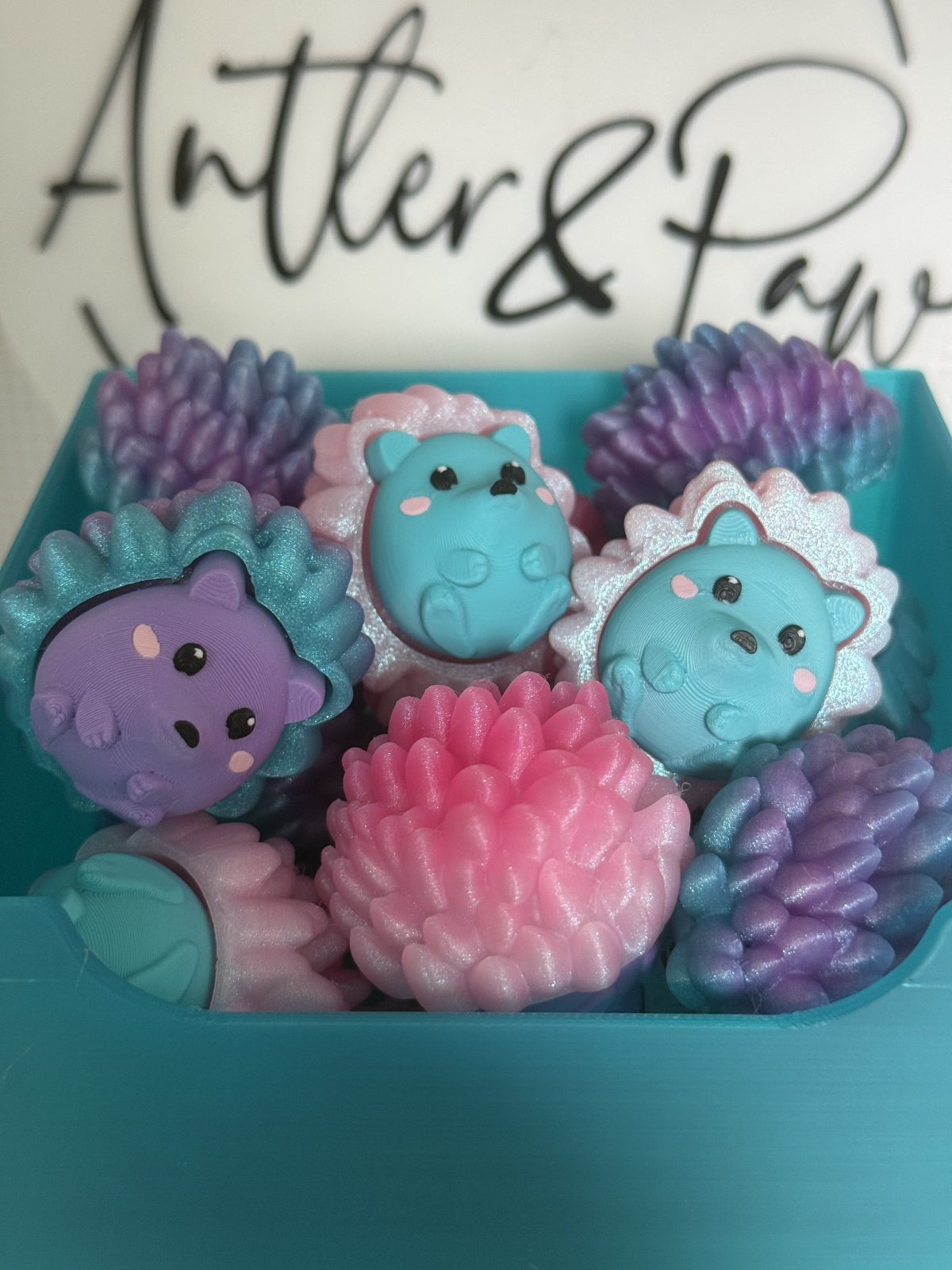
If you want a starting point, Antler & Paw's 3D-printed fidget toys and custom bag charms are built to be handled daily, and each order supports the Children's Hospital of Colorado. Browse the collection to see what fits your child.
Frequently Asked Questions
What fidget toys are good for children with ADHD?
The best options depend on your child's sensory preferences. Quiet fidget toys for classroom use, such as stress balls, smooth worry stones, and silent spinner rings, work well for kids who need to keep their hands busy without disrupting others. For kids who seek stronger tactile input, textured squishy toys or stretchy pull toys may be a better fit. Look for durable materials and age-appropriate sizing, and let your child try a few types to see which one they reach for most.
Are fidget toys actually helpful for kids with ADHD?
Research on fidget toys for ADHD kids is still developing, and results vary from child to child. Some studies suggest that small, repetitive hand movements can help children with ADHD maintain attention during tasks. Other studies show mixed outcomes. The most practical approach is to treat a fidget toy as one tool among many. If your child focuses better with one, keep it available. If it becomes a distraction, try a different type or remove it during certain activities.
What fidget toys are quiet enough for the classroom?
Classroom-appropriate fidgets produce little to no sound. Good choices include squishy toys made from soft foam or silicone, smooth worry stones, fabric-covered stress balls, and silent spinner rings. Avoid metal clickers, hard plastic spinners, and anything with loose parts that rattle. Before sending a fidget to school, test it yourself in a quiet room. If you can hear it from a few feet away, it is probably too loud for a classroom setting.
How do I introduce a fidget toy to my child's teacher?
Start with a short conversation. Explain that your child uses a fidget toy to support focus, not as a toy to play with. Offer to provide a quiet option that will not distract classmates, and ask the teacher what they have observed during lessons. If the school has a 504 plan or IEP, you can request that a fidget tool be written into it as an accommodation. Keep the conversation collaborative, and check in after a couple of weeks to see how it is working.
Finding a fidget your child actually keeps using takes a little trial and error, and that is normal. At Antler & Paw, we make durable 3D-printed fidget toys, customizable bag charms, and DIY painting kits designed to be handled, personalized, and loved for more than a week. Every purchase helps share comfort with children and families at the Children's Hospital of Colorado. Get started with Antler & Paw and find a fidget your child will reach for on their own.