 blog
Fidget Toys for Sensory Needs: A 2026 Guide
Last Updated: October 23, 2026
Quick Summary
Fidget toys for sensory needs provide tactile, auditory, or visual stimulation that helps people regulate their nervous system and maintain focus. They work best when matched to individual sensory preferences, whether someone seeks strong pressure, subtle textures, or repetitive motion, rather than choosing based on popularity alone.
- The global fidget toys market is projected to grow from $9.57 billion in 2026 to $17.65 billion by 2034.
- Quiet fidget toys like kneaded erasers, textured stress balls, and worry stones work best in school settings without disrupting others.
- Sensory-seeking children need durable, high-stimulation fidgets; cheap toys wear out quickly and feel unsatisfying.
- Fidgets are tools that support regulation, not replacements for professional support, therapy, or medication.
- Observe a child's baseline behavior for several days, then introduce a fidget for at least a week to evaluate actual benefit.
Table of Contents
- Understanding Fidget Toys and Sensory Needs
- Quiet Fidget Toys for School Settings
- Tactile Fidget Toys: What Works Best
- Sensory-Seeking Toys for Kids: Matching Preferences
- Fidget Toys for ADHD: Focus and Restlessness
- Safety, Durability, and Realistic Expectations
- How to Know If a Fidget Toy Is Actually Helping
- Frequently Asked Questions
Understanding Fidget Toys and Sensory Needs
Fidget toys for sensory needs provide tactile, auditory, or visual stimulation that helps people regulate their nervous system and maintain focus.
The global fidget toys market reflects growing recognition of their value. Fortune Business Insights projects the market will grow from $9.57 billion in 2026 to $17.65 billion by 2034, demonstrating substantial demand across age groups and use cases.
Sensory preferences vary widely. Some crave intense tactile input, resistance, texture, or weight, while others respond to subtle, quiet stimulation that won't draw attention.
Research from Current Psychology and Springer on parental perspectives of fidget toys indicates that fidgets may help children self-regulate and reach an arousal level supporting attention. However, the evidence quality varies.
Quiet Fidget Toys for School Settings
Quiet fidget toys for school provide sensory input without disrupting classmates or drawing teacher attention. A toy that clicks, beeps, or makes noise will get confiscated or banned, no matter how much it helps.
According to Understood's guidance on fidgets for kids, you should avoid using a fidget if it distracts others, which rules out anything with noise, movement that catches the eye, or pieces that might fall.
A quiet fidget that works at home might feel too subtle in an overstimulating classroom. Test multiple low-cost options before committing, and observe whether the child actually uses them or abandons them.
Tactile Fidget Toys: What Works Best
Tactile fidget toys deliver physical sensations through touch, squeezing, rubbing, popping, or manipulating textures. They're among the most effective options for strong sensory seekers or highly tactile-sensitive people, but "tactile" is not one need. A toy that satisfies a pressure-seeker can feel aversive to someone who dislikes firm resistance. The useful question isn't "which tactile fidget is best" but "which tactile channel does this person seek or avoid?"
Match the tactile channel to the need
Use this guide to narrow the field before buying, pairing each tactile preference with toy types, settings, and trade-offs.
- Deep pressure and squeeze seekers: Stress balls, putty, and resistance-based squishies. Best for home, therapy, and quiet desk use. Trade-off: foam and gel balls can tear or leak; putty picks up lint and dries out if left uncovered.
- Texture and rubbing seekers: Textured fidgets with bumps, ridges, or woven surfaces, plus smooth worry stones for gentler input. Best for pockets and classrooms. Trade-off: rough textures can snag clothing or feel irritating to sensitive skin.
- Popping and repetitive-motion seekers: Reusable pop-it-style fidgets and bubble-wrap alternatives. Best for homework and waiting periods. Trade-off: some versions are visually busy and can draw peers' attention; silicone can attract dust.
- Oral-tactile seekers: Chewable jewelry and oral-motor tools made for chewing. Best for older children and adults who mouth objects. Trade-off: these are not chew toys for pets or toddlers, and they must be inspected for wear.
- Proprioceptive and moldable seekers: Kneaded erasers and modeling putty that combine touch with resistance. Best for quiet fidgeting during listening tasks. Trade-off: small pieces and residue on desks.
What the research and practitioners actually say
Sensory-seeking people gravitate toward strong, consistent feedback, while sensory-sensitive people prefer gentler, predictable options. Life Skills Advocate emphasizes matching fidgets to sensory needs and keeping them in the background, satisfying, not overwhelming. Occupational therapists commonly trial two or three textures across a week rather than committing to one, since preference isn't reliably predicted by diagnosis.
Durability and material trade-offs
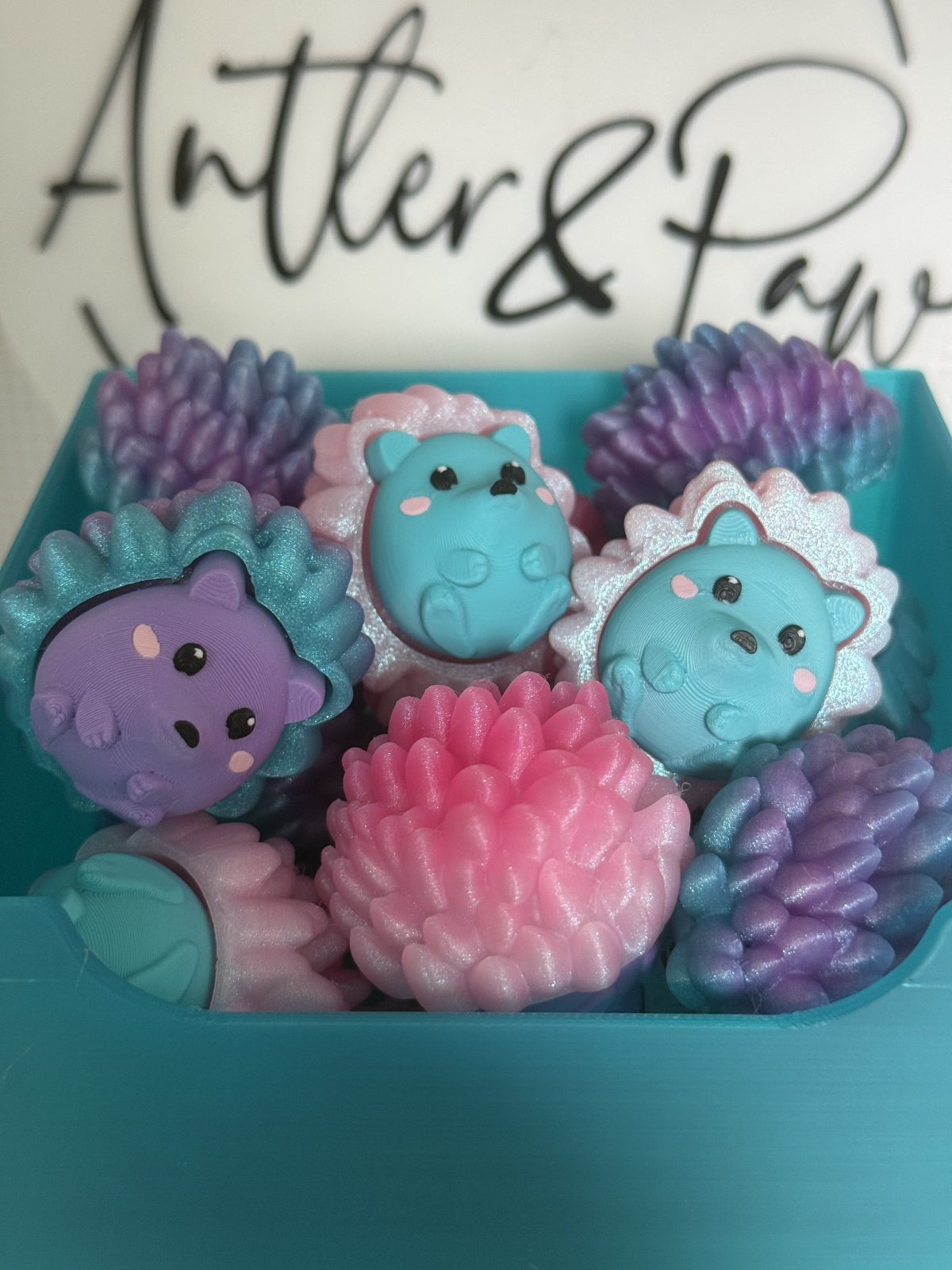
Durability matters. Cheap squishy toys tear or lose resilience after weeks of heavy use, and gel-filled balls leak. 3D-printed fidgets offer solid construction built for repeated manipulation, especially relevant for daily use. Weigh these material trade-offs:
- Silicone and TPR: Quiet and satisfying, but can attract lint and may degrade with repeated stretching.
- Foam and gel: Inexpensive and soft, but prone to tearing and leakage.
- 3D-printed polymer: Durable and customizable, but hard edges and small parts need a once-over for rough seams.
- Metal and stone: Weighted and smooth, but heavier and noisier if dropped.
Sensory-Seeking Toys for Kids: Matching Preferences
Sensory-seeking toys for kids are designed for children who actively pursue strong sensory input, fidgeting constantly, seeking deep pressure, craving intense textures, or needing high movement and stimulation to feel regulated.
These children often have ADHD, autism, or sensory processing differences, meaning their nervous system needs more input than typical peers to reach a calm, focused state.
Effective sensory-seeking toys tend to have:
- Strong tactile feedback: Textured surfaces, resistance, or weight
- Repetitive motion: Options that encourage continuous manipulation
- Visual engagement: Bright colors, movement, or patterns (though this matters less than tactile input)
- Durability: These kids use fidgets intensely, so cheap options fail quickly
Involve the child in the choice when possible. A child who loves squeezing might ignore a spinner; one who loves popping might need bubble fidgets or pop-its.
Fidget Toys for ADHD: Focus and Restlessness
Fidget toys for ADHD serve a specific neurological function: they provide just enough stimulation to help the brain reach optimal arousal for focus. This isn't distraction, it's regulation. Many people with ADHD report that fidgeting actually improves their ability to listen, read, or concentrate on tasks.
The mechanism is real but often misunderstood. A person with ADHD may have an underactive prefrontal cortex, needing more input to stay alert.
The challenge: not every fidget works for ADHD. A toy that's too subtle might be ignored. A toy that's too engaging might become the focus instead of supporting focus. The ideal fidget for ADHD tends to be:
- Repetitive and tactile: Something you can manipulate continuously without thinking
- Not visually demanding: You shouldn't need to watch your hands to use it
- Durable: Kids with ADHD often fidget intensely and frequently
- Portable: Many people with ADHD use fidgets at school, work, or in multiple settings
The fidget spinner research involved a small sample, but the principle holds: the right fidget, matched to the person, can support focus. The wrong one, boring, fragile, or attention-demanding, will end up abandoned.
Safety, Durability, and Realistic Expectations
Fidget toys for sensory needs aren't medical devices, and they shouldn't be treated as replacements for professional support. They're tools that complement therapy, behavioral strategies, and (when appropriate) medication. Most practitioners frame them as one part of a regulation toolkit, not a standalone fix.
Age, choking, and supervision
Children under 3 should not use small fidgets or any toy with parts that fit through a toilet-paper tube, choking hazards. For children under 4, choose larger fidgets without small parts, loose beads, or detachable pieces. Children who chew need food-safe, non-toxic materials and products explicitly labeled for oral use. Supervise fidgets with cords, strings, or loops to prevent entanglement.
Material safety and inspection
Check for a nontoxic finish and avoid peeling paint, strong chemical odors, or loose glitter. Before first use, inspect seams, joints, and printed edges for sharp points or rough burrs, especially on 3D-printed items. A weekly once-over catches cracks, loose parts, or worn chew surfaces. Discard any fidget that has torn, leaked, or developed a sharp edge.
Cleaning and shared environments
Fidgets travel between hands, pockets, and desks, so cleaning matters more than most guides admit. A practical routine:
- Wipe hard-surface and 3D-printed fidgets with a damp cloth and mild soap, then air dry.
- Follow the manufacturer's instructions for silicone and putty; some putty cannot be washed and should be replaced when dirty.
- Keep personal fidgets personal in classrooms and workplaces to limit germ sharing, and label them with the user's name.
- In shared settings, choose quiet, non-porous options that can be wiped between users.
Durability and per-use cost
A low-cost fidget might feel satisfying for a week, then tear or break, disappointing the child who loves it. A higher-quality fidget, especially solid 3D-printed options, often lasts months or years, higher upfront cost, but lower per-use cost and less waste. Proceeds also support Children's Hospital of Colorado.
Realistic expectations
A fidget toy is not a cure for ADHD, anxiety, or sensory processing differences. It's a tool that can support regulation and focus when used appropriately. Some children benefit significantly; others use it briefly and lose interest. Individual response varies, and that's normal. The evidence base is mixed and often based on small studies, so treat any single toy as a hypothesis to test rather than a guaranteed improvement.
How to Know If a Fidget Toy Is Actually Helping
Evaluating whether a fidget actually works is the hardest part.
Then introduce the fidget and observe for at least a week. Look for:
- Sustained use: Does the child actually reach for the fidget and use it, or does it sit unused?
- Behavioral changes: Do they seem calmer, more focused, or less anxious when using it?
- Context appropriateness: Does it help in the settings where they need support most (classroom, homework, transitions)?
- Durability: Is the toy holding up to the level of use?
If the fidget isn't used after a week, it likely isn't meeting the child's sensory needs, try a different type, more tactile input, less noise, or stronger resistance.
Document what you observe and share it with a therapist, teacher, or clinician, who can help interpret whether changes are meaningful and whether the fidget should stay in the toolkit.
The goal isn't perfection, it's finding tools that genuinely support the individual's regulation and focus.
Choosing the right fidget toy for sensory needs requires understanding your child's individual preferences and testing options before committing.
Frequently Asked Questions
Do fidget toys actually help with focus and attention?
Fidget toys can support focus for some people, particularly those with ADHD or sensory processing differences. Research indicates that fidgets may help children self-regulate and reach an arousal level that supports attention. However, effectiveness depends on matching the fidget to the person's sensory preferences and the setting. A fidget that distracts others or doesn't match sensory needs may actually reduce focus rather than improve it.
What makes 3D-printed fidget toys different from mass-produced options?
3D-printed fidget toys offer customization, unique designs, and often higher durability when made with quality materials. They can be tailored to individual sensory preferences and are frequently produced in smaller batches with attention to detail. Many also support charitable causes, adding purpose beyond the fidget itself.
How do I choose the right fidget toy for sensory needs?
Match the fidget to the person's sensory preference: tactile seekers benefit from textured, squishy, or clicky toys; visual learners prefer spinners or popping toys; oral-motor needs are met with chewable jewelry. Consider the setting, quiet fidgets work in classrooms, while more stimulating options suit home use. Test different types to see which one the person naturally gravitates toward and uses consistently without distraction.
Are fidget toys safe for children, and how durable are they?
Quality fidget toys are safe when age-appropriate and supervised. Check for small parts unsuitable for young children, and ensure materials are non-toxic. Durability depends on construction. Regular inspection for wear, especially on hinges or moving parts, helps catch damage early and prevents choking hazards.